
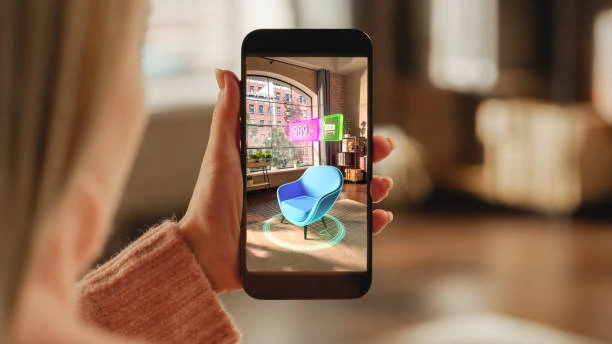
This revolutionary technology bridges the gap between the real and digital worlds by creating immersive experiences that were once only possible in science fiction. By 2026, AR has evolved from a novelty into an essential tool that’s reshaping industries, revolutionizing education, and fundamentally changing how we perceive and interact with our surroundings.
What is augmented reality (AR)?
AR creates a composite view by superimposing computer-generated imagery, sounds, and other sensory enhancements over a real-world environment in real-time. Unlike virtual reality, which creates entirely artificial environments, understanding the differences between AR and VR reveals that AR enhances reality rather than replacing it entirely.
The technology works through sophisticated algorithms that track your environment and overlay contextually relevant digital content. This creates seamless integration between physical and digital worlds, making information instantly accessible and interactions more intuitive than ever before.
Everyday examples of AR
Have you ever used an app to visualize furniture in your home before buying it? Or explored a new neighborhood through a street view tool with overlay information? These are everyday applications of AR that have become commonplace by 2026. In entertainment, think of photo filters that transform your appearance or games like Pokémon GO that merge virtual elements with real-world settings.
Modern AR applications extend far beyond entertainment. Navigation apps now provide real-time directions overlaid on your camera view, translation apps instantly convert foreign text through your camera, and shopping apps let you virtually try on clothes, makeup, or accessories before purchasing.
But AR isn’t just for fun. In business, it’s driving innovation by addressing real-world challenges in surprising and impactful ways. The importance of AR in business has grown exponentially, with companies reporting significant improvements in efficiency, training effectiveness, and customer engagement. Let’s explore how.
How AR transforms your daily life in 2026
AR has fundamentally changed how we navigate, shop, learn, and communicate in our daily lives by making digital information seamlessly accessible in real-world contexts.
Enhanced Shopping Experiences
Retail has been revolutionized through AR, with 87% of consumers now using AR for shopping decisions according to 2026 industry reports. Virtual try-ons for clothing, makeup, and accessories have reduced return rates by 35%, while furniture placement apps have increased customer satisfaction by 42%. Major retailers report that AR-enabled shopping experiences lead to 2.7x higher conversion rates compared to traditional online shopping.
Revolutionized Navigation and Travel
GPS navigation has evolved beyond simple map directions. Modern AR navigation overlays turn-by-turn directions directly onto your real-world view, highlights points of interest, and provides real-time information about traffic, weather, and local events. Travel experiences are enhanced with instant translation of signs, menus, and conversations, making international travel more accessible than ever.
Transformed Social Interactions
Social media platforms now integrate sophisticated AR features that go beyond simple filters. Users can share location-based AR experiences, leave virtual messages for friends in specific locations, and participate in collaborative AR games and activities. These features have created new forms of social connection and community building.
How AR works
At its core, AR enhances your reality by adding layers of useful, interactive digital content through a sophisticated four-step process. Here’s how modern AR technology operates in 2026:
- Detection and Understanding: AR-enabled devices like smartphones, tablets, or smart glasses use advanced computer vision, LiDAR sensors, and AI-powered object recognition to understand physical environments. These systems can identify specific objects, read text, recognize faces, and map three-dimensional spaces with millimeter precision.
- Digital Twin Integration: A digital twin, or a 3D virtual model of the physical object, connects the physical and virtual worlds. Cloud-based AI systems process this information in real-time, accessing vast databases of object information, user preferences, and contextual data.
- Data Overlay: Your AR device accesses relevant information from cloud services and superimposes this data onto the real-world view. This includes interactive 3D models, instructional videos, real-time data feeds, and personalized recommendations, all enhanced by GPS, accelerometers, and gyroscopes for precise positioning.
- Interactive Experience: With real-time updates and low-latency processing, you can interact with AR interfaces using touchscreens, voice commands, hand gestures, or eye tracking, creating a dynamic and responsive digital workspace that adapts to your needs.
AR transforming key industries worldwide
By 2026, AR has become a transformative force across multiple industries, with global AR market value reaching $198 billion and driving unprecedented changes in how businesses operate and serve customers.
Healthcare Revolution
Medical professionals now use AR for surgical planning, patient education, and complex procedure guidance. Surgeons can visualize patient anatomy in 3D before operations, medical students learn through immersive AR simulations, and patients better understand their conditions through AR visualizations. Healthcare AR applications have improved surgical precision by 23% and reduced training time by 40%.
Education Transformation
Educational institutions have integrated AR to create immersive learning experiences. Students can explore ancient civilizations, manipulate molecular structures, and visualize complex mathematical concepts in three dimensions. Educational AR has increased student engagement by 68% and improved knowledge retention by 55% compared to traditional teaching methods.
Real Estate Innovation
Property viewing has been revolutionized through AR virtual tours, allowing potential buyers to visualize renovations, furniture placement, and property potential without physical visits. Real estate AR applications have reduced time-to-sale by 31% and increased buyer satisfaction by 45%.
Automotive Integration
Modern vehicles integrate AR head-up displays that project navigation, speed, and safety information directly onto windshields. Automotive AR enhances driver safety by reducing distraction and providing critical information without requiring drivers to look away from the road. This technology has contributed to a 28% reduction in navigation-related accidents.
Why AR matters in industry 4.0
AR serves as a cornerstone of Industry 4.0, the current industrial revolution that integrates digital technologies like IoT, big data, machine learning, and automation to create smarter, more connected manufacturing ecosystems. By 2026, over 73% of manufacturing companies have implemented AR solutions to improve operational efficiency.
This integration represents a fundamental shift in how industries operate, moving from traditional manual processes to intelligent, data-driven operations that leverage real-time insights and predictive analytics. The synergy between AI implementation and AR creates unprecedented opportunities for business transformation and competitive advantage.
Key Applications of AR in Industry
- Design and Prototyping: AR enables designers and engineers to visualize and test products in 3D before building physical prototypes. This approach reduces development costs by up to 47% and accelerates time-to-market by 34%. Teams can collaborate on designs in real-time, regardless of geographic location, and make instant modifications based on stakeholder feedback.
- Maintenance and Troubleshooting: Imagine pointing your device at a machine to instantly access comprehensive manuals, identify potential issues, or connect with remote experts for real-time guidance. AR-powered maintenance has reduced equipment downtime by 41% and improved first-time fix rates by 52%, keeping operations running smoothly and profitably.
- Employee Training: AR transforms traditional training by creating immersive, hands-on learning experiences that simulate real-world scenarios without associated risks. Employees can safely practice complex procedures, understand intricate equipment operations, and learn through interactive 3D models. This approach has improved training effectiveness by 58% while reducing training costs by 39%.
- Quality Control: With AR-enabled quality control systems, workers can identify defects early, optimize production processes, and ensure consistent quality standards. Smart glasses provide real-time insights about components, manufacturing tolerances, and quality metrics, reducing errors by 44% and improving overall efficiency by 36%.
- Warehouse Management: AR streamlines complex inventory management processes by guiding workers through optimized routes, providing instant barcode scanning, and updating inventory systems in real-time. These improvements result in 32% faster order fulfillment and 28% reduction in picking errors.
How AR Benefits You
- Enhanced Efficiency: By providing step-by-step visual instructions, predictive insights, and contextual information, AR accelerates processes and minimizes costly errors. Workers report 43% improvement in task completion speed when using AR-assisted workflows.
- Increased Safety: AR creates risk-free environments for training and testing dangerous procedures, making workplaces significantly safer for employees. Industrial accident rates have decreased by 37% in facilities implementing comprehensive AR safety training programs.
- Improved Engagement: The interactive, immersive nature of AR keeps employees engaged and motivated throughout their workday. Companies report 51% higher employee satisfaction and 29% increased productivity when AR tools are integrated into daily workflows.
- Cost Savings: Faster prototyping cycles, reduced equipment downtime, fewer quality errors, and improved training efficiency translate to substantial cost reductions. Organizations implementing AR solutions report average cost savings of 24% within the first year of deployment.
Examples of AR in action
- Digital Twins: A comprehensive digital twin of a factory floor enables workers to perform predictive maintenance remotely, test production line modifications before implementation, and optimize workflows based on real-time data analysis. This technology has improved manufacturing efficiency by 41% while reducing unplanned downtime by 38%.
- AR-Powered Training: Workers can master new skills through immersive AR simulations that adapt to individual learning styles and pace. These programs provide immediate feedback, track progress, and ensure consistent knowledge transfer across global teams. Training effectiveness has improved by 67% compared to traditional methods.
- Streamlined Logistics: Advanced AR applications guide warehouse workers through optimized picking routes, automatically scan barcodes using computer vision, and update inventory systems in real-time. This integration has resulted in 35% faster order processing and 42% reduction in shipping errors.
- Remote Assistance: Expert technicians can provide real-time guidance to field workers through AR-enabled remote assistance platforms. This capability reduces travel costs by 56% while improving problem resolution speed by 48%, ensuring customers receive faster, more effective service.
These real-world applications demonstrate how businesses embracing web-based augmented reality gain significant competitive advantages through improved efficiency, reduced costs, and enhanced customer experiences.
The future of AR in industry
Augmented Reality continues reshaping how industries operate by seamlessly blending human creativity with advanced technologies. As we progress through 2026, AR adoption accelerates across sectors, driven by improved hardware capabilities, faster networks, and more sophisticated software platforms.
Whether it’s enhancing design processes, simplifying complex procedures, or empowering workers with real-time insights, AR has evolved from an experimental technology into an essential business tool. The integration of AR with artificial intelligence, machine learning, and IoT creates unprecedented opportunities for innovation and growth.
As businesses embrace smart manufacturing and digital transformation initiatives, AR stands out as a game-changing technology that unlocks new levels of efficiency, safety, and innovation. With its proven ability to transform challenges into opportunities, AR represents not just a technological advancement, but a fundamental shift toward more intelligent, connected, and human-centric work environments.
The success of AR implementation often depends on comprehensive digital strategies. Understanding SEO basics becomes crucial when businesses want to promote their AR solutions online, while marketing leadership plays a vital role in driving AR adoption across organizations.
What devices do I need to experience AR?
Most modern smartphones and tablets support AR applications through their built-in cameras and sensors. For professional applications, dedicated AR glasses, smart helmets, and specialized headsets provide more immersive experiences. Popular AR platforms include ARKit for iOS devices, ARCore for Android, and various enterprise-grade solutions for industrial applications.
How much does AR implementation cost for businesses?
AR implementation costs vary significantly based on complexity and scope. Simple AR mobile applications can cost between $15,000-$50,000, while comprehensive enterprise AR solutions range from $100,000-$500,000. However, businesses typically see ROI within 12-18 months through improved efficiency, reduced training costs, and enhanced customer engagement.
Is AR technology safe for daily use?
Yes, AR technology is generally safe for daily use when following manufacturer guidelines. Modern AR devices include safety features like eye strain reduction, break reminders, and environmental awareness alerts. However, users should take regular breaks, ensure proper lighting conditions, and remain aware of their physical surroundings when using AR applications.
How does AR impact job markets and employment?
AR creates new job opportunities while transforming existing roles. While some traditional positions may become automated, AR generates demand for AR developers, 3D designers, AR experience specialists, and digital content creators. Studies suggest that AR will create 2.3 million new jobs globally by 2027 while requiring workforce reskilling in traditional industries.
What internet speed is required for AR applications?
Basic AR applications require minimum internet speeds of 10-25 Mbps for smooth operation. However, complex industrial AR solutions with real-time cloud processing may require 50-100 Mbps or higher. 5G networks significantly improve AR performance by providing low latency and high bandwidth necessary for advanced AR experiences.
Companies exploring AR integration should also consider how AI marketing transforms branding strategies to effectively communicate the value of AR solutions to their target audiences.
References
- Statista – Augmented Reality Market Outlook 2026
- IDC – Worldwide Augmented and Virtual Reality Spending Guide

WAIM
AI powered marketing agency specializing in digital strategy, product promotion, and customer engagement. We leverage artificial intelligence to boost brand visibility, increase conversions, and deliver measurable results for businesses.
Related News